

When people need a fast and unbiased way to choose between two options, Coin Toss remains one of the most trusted methods in the world. From sports officials to families making everyday choices, this approach offers a clear result with no debate. Platforms like BD333 often discuss games of chance and probability, making this classic decision tool even more interesting to modern audiences.
A small metal coin has two sides, and each side has an equal opportunity to land face up. Because of that balance, the method has become a symbol of fairness. Whether you are selecting who starts a match, deciding who takes the first turn, or resolving a disagreement, this simple technique removes emotion from the process and replaces it with pure probability.
The beauty of this approach lies in its accessibility. You do not need special equipment, advanced knowledge, or preparation. Anyone with a coin can use it within seconds. This convenience has helped it remain popular for centuries across cultures, games, and professional competitions.
The History Behind Coin Toss
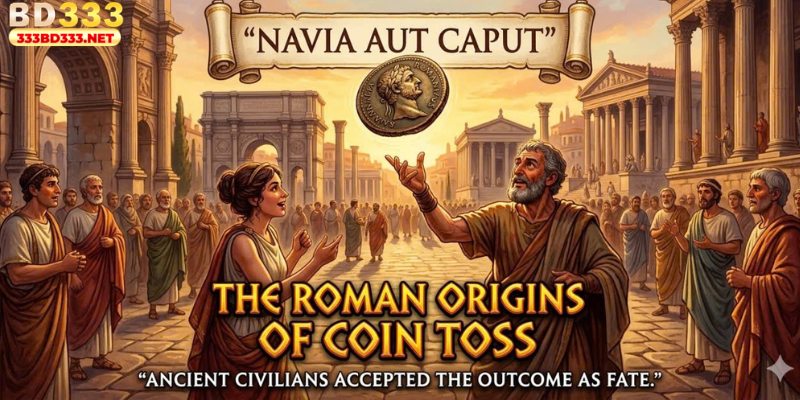
The roots of Coin Toss go back to ancient civilizations. The Romans used a similar practice known as “navia aut caput,” meaning “ship or head.” Participants assigned meaning to each side and accepted the outcome as fate.
Over time, this practice spread around the world. In many cultures, it became a respected way to settle disputes, assign duties, and make decisions when both choices seemed equally valid. The concept worked because both participants agreed beforehand to honor the result.
In organized sports, this method became a standard procedure. Football, cricket, and many other games still begin with a quick flip to determine who starts first. Its long history has reinforced public trust in the process and established it as one of the simplest forms of random selection ever created.
Why Ancient Cultures Trusted Random Outcomes
Ancient societies often believed chance reflected destiny or divine guidance. A random result felt impartial and beyond human manipulation. That belief gave the method legitimacy and encouraged people to accept the outcome peacefully.
Today, while people understand the mathematics behind probability, the sense of neutrality remains the same. The result is quick, transparent, and easy to verify.
How a Coin Toss Works
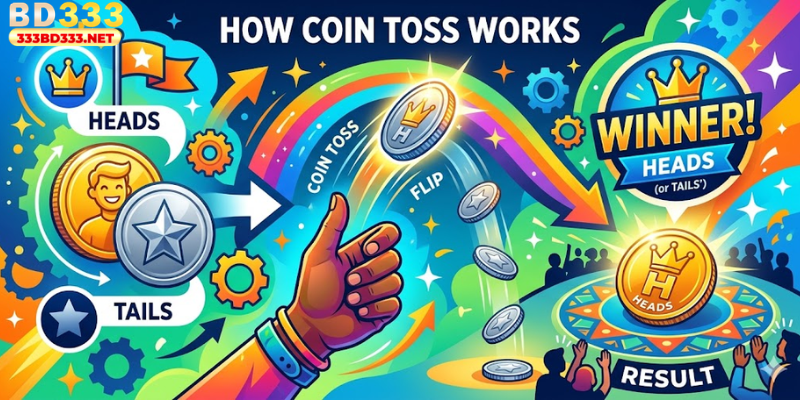
A Coin Toss involves assigning one outcome to each side of a coin, usually heads and tails. After flipping the coin into the air, the side facing upward when it lands becomes the decision.
From a mathematical perspective, each side has a probability of 50 percent, assuming the coin is balanced and the flip is fair. This equal distribution is what makes the process so reliable.
Several physical factors influence the motion, including force, height, air resistance, and landing surface. However, when performed naturally, these variables do not consistently favor one side over the other.
Because the method is simple and transparent, both participants can observe the flip and confirm the result immediately. There is no complicated rulebook and no need for interpretation.
Heads or Tails: Setting the Rules
Before the flip, each participant should agree on what each side represents. This step ensures that everyone understands the process and accepts the outcome without confusion.
Clear rules are the foundation of any fair random decision.
Why Coin Toss Remains Fair
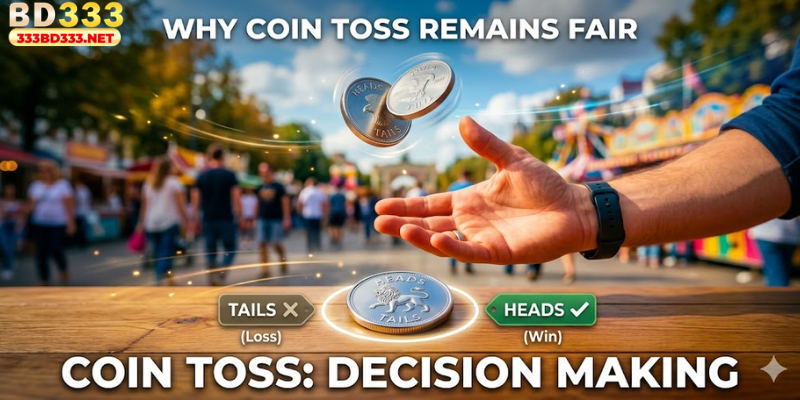
The enduring popularity of Coin Toss comes from its perceived fairness. Neither participant can predict the result with certainty, and both have an equal chance of winning.
Researchers have studied thousands of flips to understand whether hidden biases exist. While some experiments suggest slight tendencies based on flipping style, these differences are negligible in everyday situations.
Trust also plays a major role. Since the process is visible and easy to understand, participants rarely question the result. This transparency reduces conflict and speeds up decision-making.
The method is especially useful when time is limited and both options are equally acceptable. Instead of arguing, people can let probability decide.
Common Situations Where Random Decisions Help
- Choosing who goes first in a game
- Breaking a tie in informal competitions
- Selecting between two similar options
- Resolving friendly disagreements
- Making fast choices without overthinking
In all of these cases, a neutral outcome saves time and keeps the process fair.
Digital Coin Toss Tools and Gaming

Modern technology has transformed Coin Toss into a digital experience. Websites and mobile apps now simulate flips instantly, making the process available even when no physical coin is nearby.
These tools are useful for remote meetings, online games, and educational demonstrations. They also allow users to repeat flips quickly and track results over time.
Gaming communities and probability enthusiasts often explore random outcomes through platforms such as kx8, where chance-based mechanics are a key part of the entertainment experience. Digital simulations follow the same 50/50 principle and deliver immediate results.
Although technology adds convenience, the underlying concept remains unchanged: two possible outcomes, each with an equal chance of appearing.
Physical vs. Digital Methods
Physical flips offer a tactile and visual experience that many people enjoy. Digital versions, on the other hand, provide speed, accessibility, and automation.
Both methods are effective when the randomization process is properly designed.
Best Practices for Using Coin Toss Results
To get the most reliable outcome from a Coin Toss, use a balanced coin and flip it with enough force to rotate several times in the air. Let it land naturally rather than catching and turning it over by hand.
Participants should agree in advance on the meaning of heads and tails. This avoids disputes and ensures that the result is accepted.
It is also important to treat the outcome as final. The strength of this decision method comes from commitment. Once the result is known, both sides move forward without debate.
For repeated decisions, maintaining the same process helps preserve consistency and trust.
When Not to Rely on Random Decisions
This method is ideal for low-stakes choices, but it should not replace careful analysis in important matters such as financial planning, legal decisions, or long-term strategy.
In those situations, data and thoughtful evaluation are more valuable than chance.
Conclusion
Despite centuries of technological progress, Coin Toss continues to be one of the simplest and most respected ways to make fair decisions. Its balance, transparency, and universal appeal make it useful in sports, games, and everyday life. For readers interested in probability-based entertainment and digital gaming environments, kx8-1.com offers further insights into how chance remains a central part of modern experiences.


